
CIRCULAR ECONOMY
The Real Environmental Impact of Upcycling:
Facts, Numbers, and Why Your Next Purchase Matters
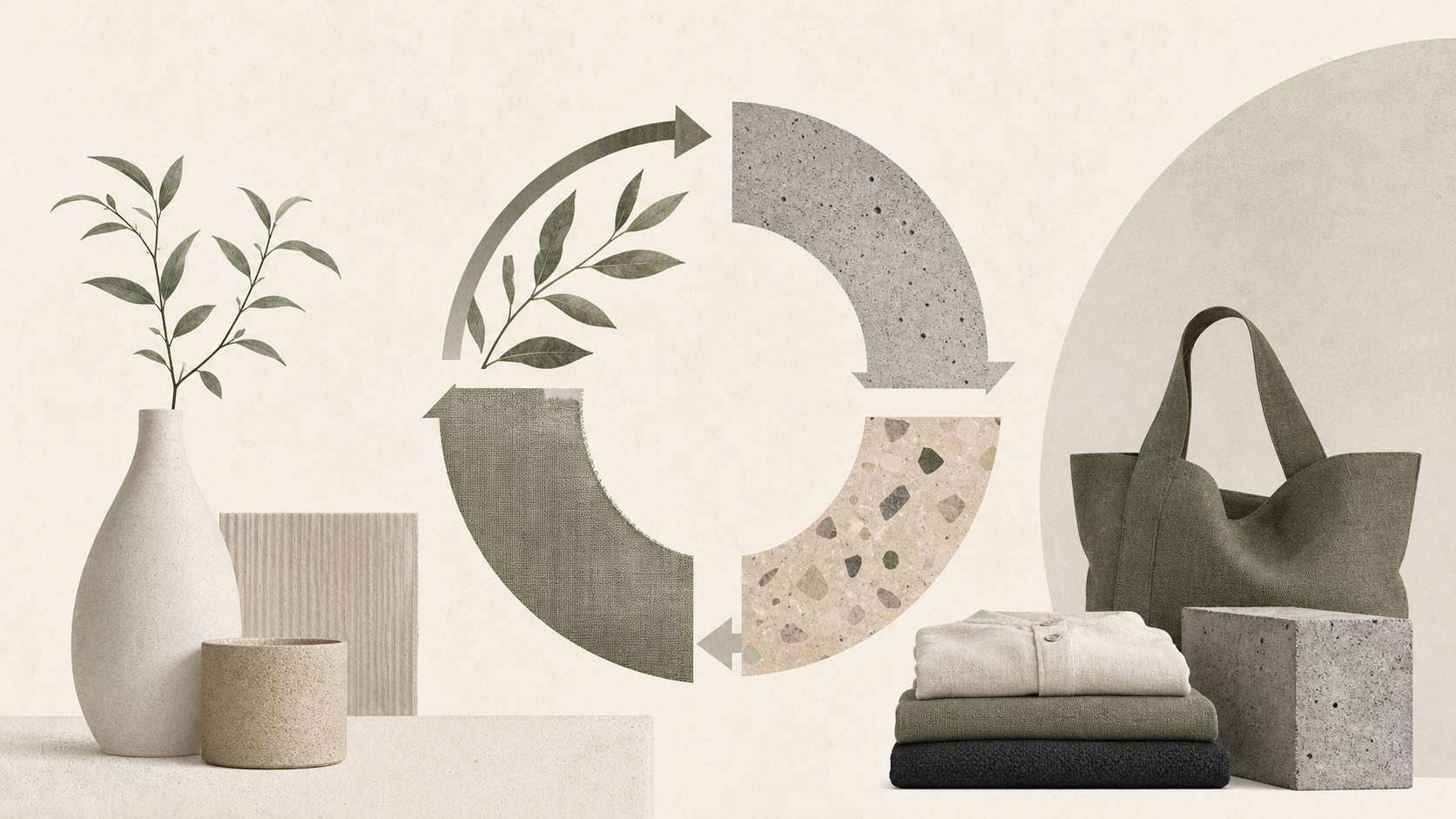
Most sustainability content tells you what to feel. This article tells you what's actually happening — with the numbers to back it up.
The Problem Nobody Talks About at IKEA
Every year, 10 million tonnes of furniture are discarded by businesses and consumers across the EU — the vast majority headed for landfill or incineration. Not broken furniture. Not furniture beyond repair. Furniture that simply went out of style, got left behind in an office move, or was never built to last more than a few years.
In Europe, 80–90% of all furniture ends up in landfills. In the UK alone, 22 million pieces of furniture are discarded each year, with the majority sent directly to landfill — and less than 1 in 10 people consider repairing their furnishings to extend their lifespan.
This isn't a recycling problem. It's a design-and-culture problem. We built an entire economy around objects meant to be replaced, and now we're living with the consequences.
Upcycled art and furniture don't fix this on their own. But they do something the mainstream market cannot: they prove it's possible to do it differently.
What the Numbers Actually Say
Before we get into what upcycling does, it helps to understand the scale of what it's responding to.
The furniture waste crisis
The Furniture Waste Crisis isn't just an eyesore or a landfill problem — it's a climate crisis contributor. Furniture is large, often made from mixed materials, and almost impossible to recycle through conventional systems. When it ends up in landfill, it doesn't just sit there — it releases methane and other greenhouse gases as it breaks down.
Research shows that 32% of bulky waste is reusable in its current state, and this figure rises to 51% when items requiring only slight repair are included. More than half of everything we throw away didn't need to be thrown away.
The textile dimension
If you buy clothing as well as home décor — and most people do — the picture gets worse. According to the European Environment Agency, buying textiles generates around 270 kg of CO₂ per person annually. The textile industry is responsible for about 9% of the microplastics entering the oceans every year, and $500 billion is lost annually in the textile industry due to poor recycling practices.
Fast fashion has a well-known sibling: fast furniture. The same logic — cheap materials, short lifespans, disposable by design — applies to the €49 shelf and the €12 print as much as it does to the €8 T-shirt.
The circular economy opportunity
Here's where it gets interesting. A global circular economy could result in a net profit of $108.5 billion per year, with revenue outstripping projected waste management costs. A circular economy would also allow us to fulfil our consumption needs with only 70% of the materials we currently extract and use.
That's not a marginal improvement. That's a structural shift in how we relate to the things we make and own.
What Upcycling Actually Does (and Doesn't Do)
Let's be specific — because vague sustainability claims don't serve anyone.
What it does: extends material life
Every object has an embedded carbon cost — the energy and resources that went into making it. When a piece of furniture is upcycled rather than replaced, that embedded carbon cost is spread across a longer life. The alternative (new production) generates its own carbon cost from scratch.
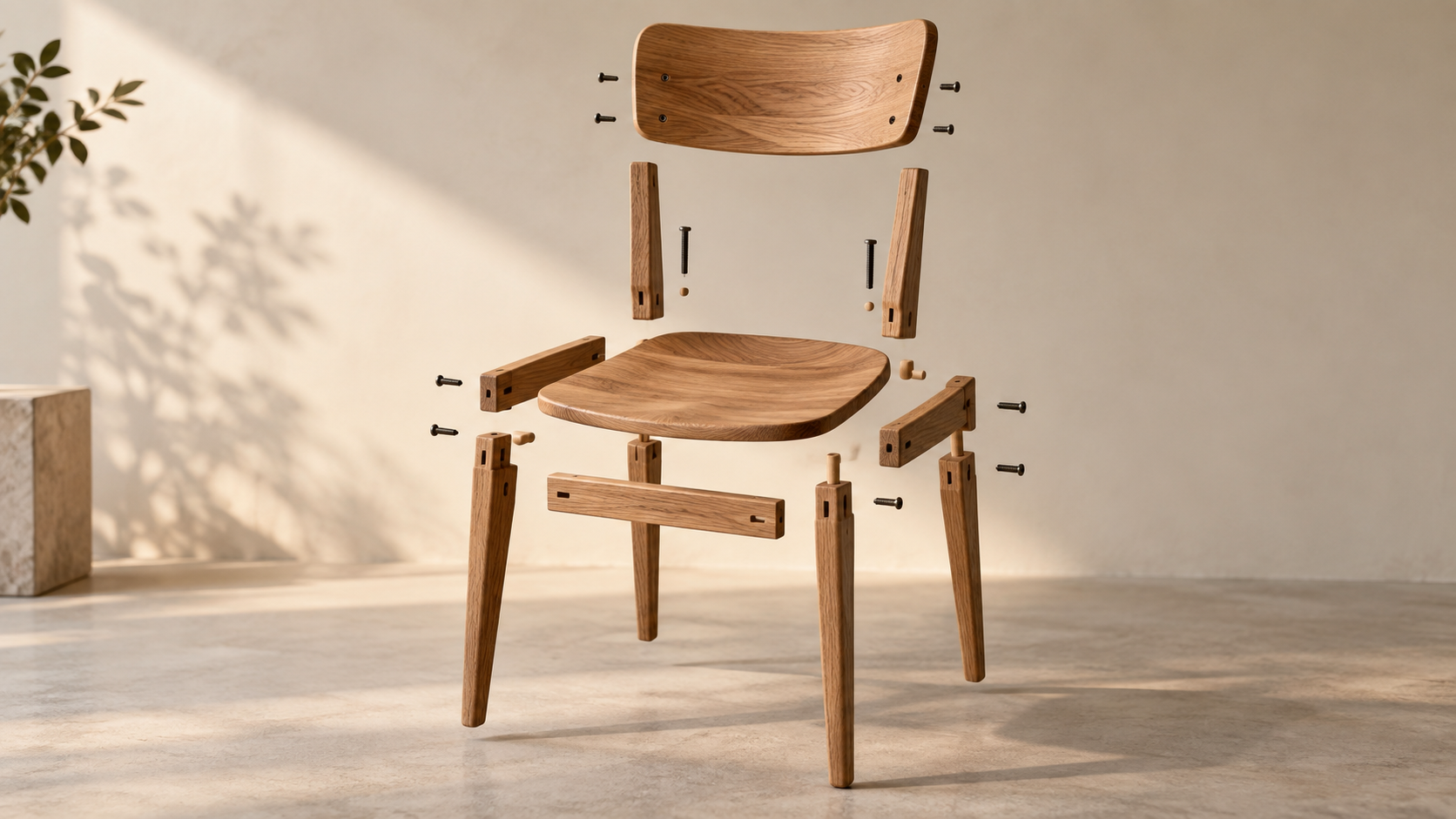
Extending the life of clothing by just nine months of active use would reduce carbon, water, and waste footprints by 20–30% each. The same principle applies to furniture, home décor, and art objects. A wooden table that lasts 30 years instead of 5 is not just more economical — it's a fundamentally different environmental proposition.
What it does: keeps materials out of landfill
Recyclables save over 700 million tonnes of CO₂ emissions every year — a figure projected to reach 1 billion tonnes by 2030. Upcycling goes further than recycling: it preserves the shape, craft, and character of an object rather than breaking it down into raw materials. A reclaimed oak table doesn't need to be pulped and re-formed. It needs to be cleaned, repaired, and given to someone who values it.
What it does: connect objects to stories
This is harder to quantify but arguably more important for behaviour change. Research published in the Harvard Business Review found that what consumers value most about upcycled products is not their sustainability but their creativity. People don't fall in love with objects because they have a low carbon footprint. They fall in love with objects because those objects mean something.
An upcycled lamp made from a factory worker's old copper piping carries a story. That story creates attachment. Attachment creates care. Care extends lifespan. Longer lifespan = reduced environmental impact. The emotional dimension isn't separate from the environmental one — it's the mechanism through which the environmental benefit actually happens.
What it doesn't do: solve everything
We'll be honest. Buying upcycled art is not a substitute for systemic policy change. One artisan marketplace cannot offset the 10 million tonnes of furniture waste generated annually in the EU.
What it can do is participate in a culture shift — and that culture shift is increasingly being backed by policy.
Why 2026 Is a Turning Point for Europe
If you follow EU policy at all, you'll know that 2026 is a significant year for the circular economy. Several major frameworks are converging:
The EU's Circular Economy Act, due for adoption in 2026, aims to establish a single market for secondary raw materials, double the circularity rate by 2030, and reduce dependence on strategic raw materials.
Starting in July 2026, the EU will ban the destruction of unsold consumer products in the textile and footwear sectors for large companies — a measure designed to reduce waste and environmental impact in line with the EU's strategy for sustainable and circular textiles.
From September 2026, consumers across the EU will begin seeing new labels at the point of sale, giving them clearer information on the durability and reparability of goods — part of a directive designed to empower consumers for the green transition and strengthen protection rules against greenwashing.
In practical terms: buying habits are about to become more informed, more scrutinised, and more consequential. The regulatory environment is shifting to reward genuine circularity and penalise the kind of throwaway design that has dominated the market for decades.
Upcycled art and furniture — by definition — are already on the right side of this shift.
The Difference Between Recycling, Upcycling, and "Greenwashing"
These terms are often used interchangeably. They shouldn't be.
Recycling breaks a material down into its components to be used again. A glass bottle becomes glass chips that become a new bottle. Value is partly preserved, but form and craft are lost.
Upcycling preserves and enhances the value of an object. A glass bottle becomes a lamp. An oak shipping pallet becomes a dining table. The skill of the maker adds value to the material, rather than simply processing it back into a commodity.
Greenwashing uses the language of sustainability without the substance. A mass-produced print marketed as "eco-friendly" because it uses FSC-certified paper is not the same as a piece of furniture made from salvaged materials by an independent craftsperson who can tell you exactly where every plank came from.
The distinction matters because it affects what you're actually buying — and what environmental impact your purchase actually has.
How to Tell Real Upcycled Art from Marketing
If you're buying with sustainability in mind, here are five questions worth asking:
1. Can the artist tell you where the material came from? Not "vintage sources" or "reclaimed materials" — but the actual origin. A salvage yard in Ghent. An estate sale in Lyon. A closed factory in Manchester. Provenance is traceable or it isn't.
2. Was the material genuinely destined for disposal? There's a difference between using new wood with a distressed finish and using wood salvaged from a demolished building. The first is aesthetic; the second is genuinely circular.
3. Does the piece show the hand of its maker? Mass-produced "upcycled" products — where the same "vintage look" is replicated at scale — are a contradiction in terms. Genuine upcycling is almost always unique or small-batch, because the source materials are unique.
4. Is it built to last? Upcycled art made from quality salvaged materials tends to outlast new production by decades. If the finish looks cheap or the construction feels flimsy, it probably isn't the real thing.
5. Does the price reflect the labour? Authentic upcycled pieces take time — sourcing, cleaning, repairing, finishing, crafting. A piece priced at €40 is probably not the result of three days of skilled work. Honest pricing is itself a transparency signal.
What Buying Upcycled Actually Changes
When you buy a piece of upcycled art or furniture from an independent maker, here's what actually happens:
- One less object goes to landfill or incineration
- One less piece of new furniture or art needs to be manufactured, shipped, and packaged
- One independent craftsperson earns a living from making things last
- One home gains an object with character, story, and genuine longevity
- One more data point accumulates for the argument that sustainable objects can also be beautiful ones
None of this saves the planet on its own. But culture is made of individual choices, and individual choices are influenced by what's available, visible, and valued.
That's what ArtCycle exists to do: make the right choice the beautiful one.
Further Reading
If you want to go deeper on the data and policy behind what's discussed here, these sources are worth your time:
- European Environment Bureau — Circular Economy Opportunities in the Furniture Sector
- European Commission — Circular Economy Action Plan
- Harvard Business Review — Why People Really Buy Upcycled Products
Ready to put this into practice? Browse our full collection of upcycled art and furniture → Want to support a maker directly? Explore our artist profiles → Stay close to the circular economy conversation: join our newsletter →

Sign in to your ArtCycle account to leave a comment.
Sign in to comment ↗