
UPCYCLING
What Is Upcycling? A Practical Guide to Giving Furniture a Second Life
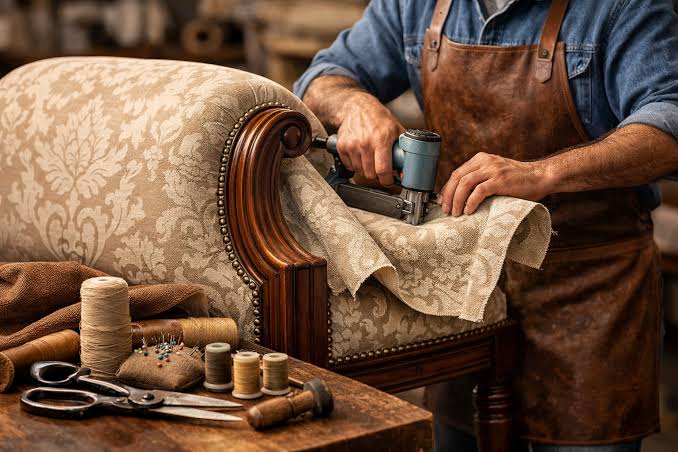
Upcycling turns something old, unwanted or broken into something that is worth more than before, without melting it down or starting from scratch.
Most of us know recycling: the bin for paper, glass and plastic. Upcycling is a different idea. Instead of breaking an object back into raw material, you keep the object, keep what is good about it and give it a new look, a new use or a new life.
A solid oak table with a ruined top, a chair with a beautiful frame and worn-out upholstery, a stack of old doors: for an upcycler these are not rubbish. They are the starting point.
Upcycling in one sentence
Upcycling means transforming an existing object into something better, more useful or more beautiful, while using as much of the original as possible. The "up" matters: the result should have more value, in design, in function or in meaning, than the thing you began with.
What upcycling can look like
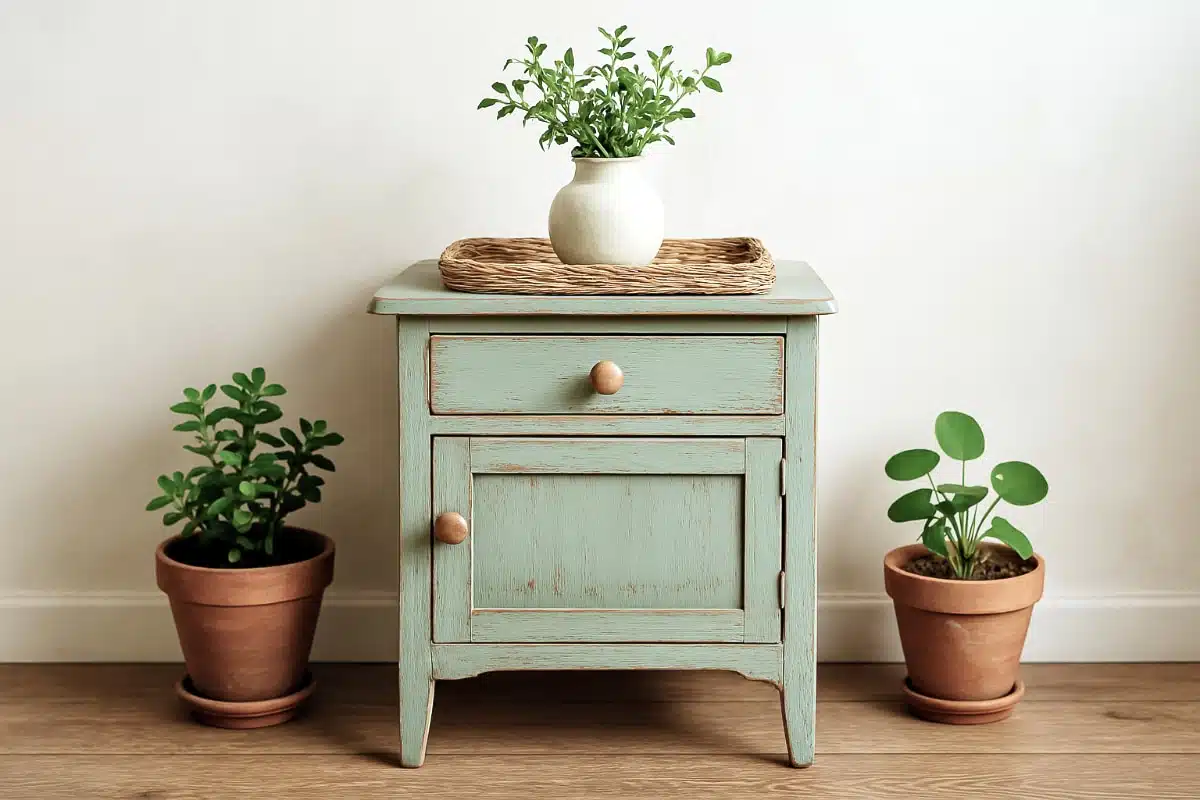
- A new surface. Stripping, sanding and refinishing, or painting and patterning a piece so it fits a new interior.
- A new material. Replacing worn upholstery with fabric that suits the frame, or combining wood with metal or glass.
- A new function. A ladder becomes a bookshelf, a suitcase becomes a side table, a cabinet door becomes a headboard.
- A new story. An artist reworks an inherited piece so that it keeps its memory but speaks in a contemporary way.
Why people choose it
It keeps good material in use. Older furniture is often made of solid wood and built to be repaired. Making a new piece needs new material, energy and transport. Reusing what already exists avoids much of that.
It gives you something nobody else has. A mass-produced item is the same in every house. An upcycled piece is shaped by the object it started from and by the person who reworked it.
It keeps memories. A table from a grandparent or a chair from a first flat can carry real feeling. Upcycling lets you keep that feeling while the object finally suits your home.
How to start with your own piece
- Look at the structure first. Is the frame sound? Wobbly joints can usually be fixed. Rot, woodworm or a broken frame are harder.
- Decide what you want to keep. The shape? The wood? A detail such as the handles or the legs?
- Choose how far to go. A light refresh, a bold colour, a complete redesign: each needs a different level of skill and time.
- Decide who does the work. You can try it yourself in a workshop, or work with an artist who has the tools, the materials and the eye for it.
Upcycling with an artist
This is the idea behind ArtCycle in Rotterdam. We connect people who own a piece with artists who see possibility in it. You share what you have, artists respond with proposals, and together you decide how the object is reimagined. Along the way the artist is paid for their craft and the object stays out of the waste stream.
If you would like to see the result before you commit to anything, browse the upcycled pieces already made by our artists, or have a look at the items waiting to be revived.
Upcycling is not only for experts
You do not need a full workshop to begin. A good first project is small: a stool, a frame, a lamp base. If you want hands-on guidance, our workshops teach materials and techniques in a group, and you take home something you made yourself.
An overlooked object can hold memory, character and possibility. Upcycling is the way to find out which.
Sign in to your ArtCycle account to leave a comment.
Sign in to comment ↗